
After exploring readability, it is time to look at how typography contributes to building a brand’s visual identity.
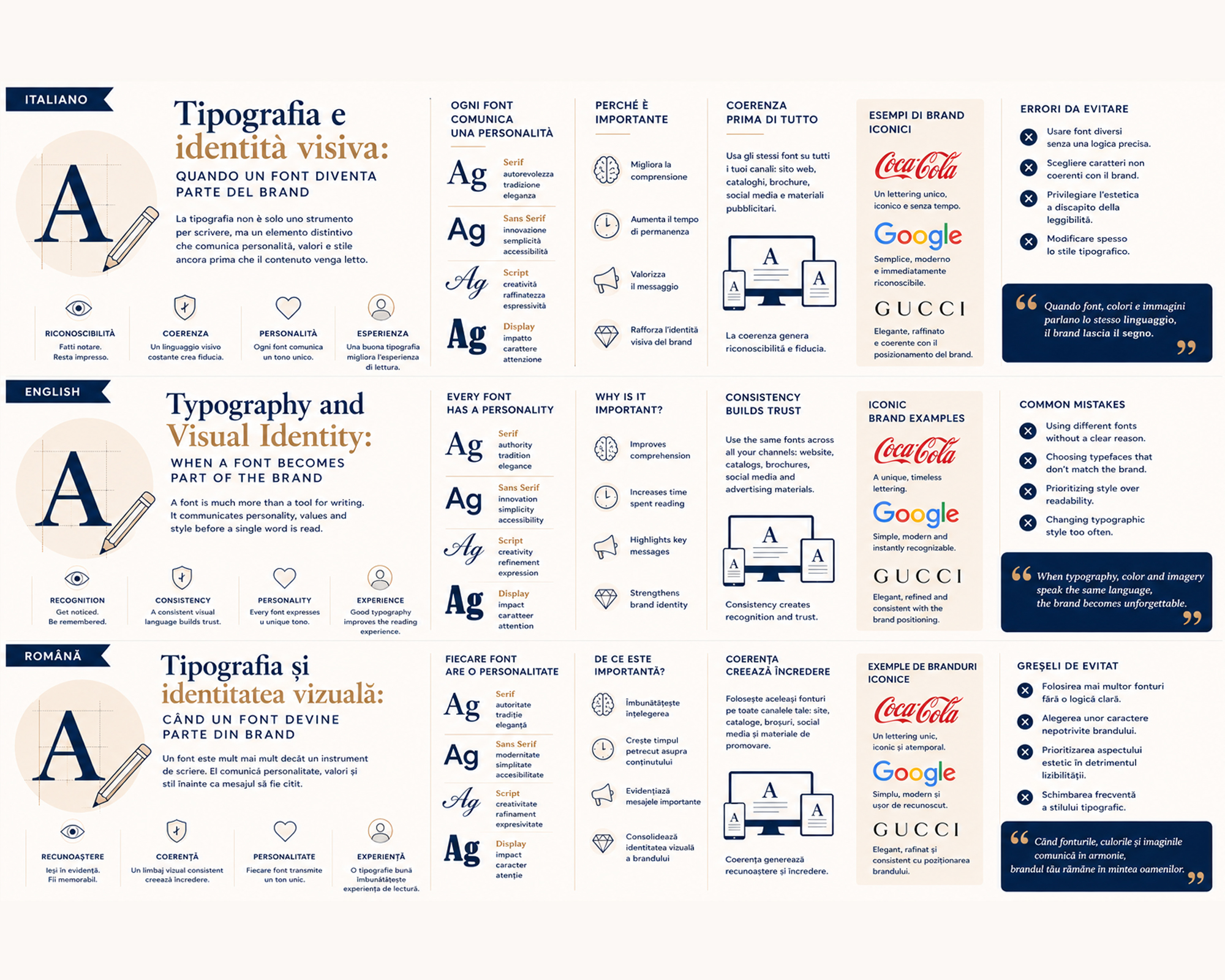
A font is much more than a tool for writing. It communicates personality, values and style before a single word is read.
For this reason, typography is one of the most strategic elements of brand design.
Typography as a Recognition Tool
Every brand aims to be instantly recognizable.
Colors, logos, imagery and typography work together to create a consistent visual language.
Think of Coca-Cola and its iconic lettering, or Google, whose clean, modern typeface has become an essential part of its identity.
In both cases, typography is inseparable from the brand.
Every Font Has a Personality
Just as colors evoke emotions, typefaces communicate different impressions.
Serif fonts suggest:
- authority;
- tradition;
- elegance.
Sans Serif fonts communicate:
- innovation;
- simplicity;
- accessibility.
Script fonts convey creativity and refinement, while Display fonts create impact and memorability.
Typography should always reflect the brand’s tone of voice.
Consistency Builds Trust
A strong visual identity depends on consistency.
Using the same typography across websites, brochures, catalogs, social media and advertising materials strengthens brand recognition.
Frequent changes, on the other hand, weaken communication.
Consistency creates trust.
Typography and User Experience
Typography affects much more than aesthetics.
It directly influences how users experience content.
Clear hierarchy, appropriate spacing and consistent fonts make information easier to read and understand.
Thoughtful typography makes communication more effective.
Common Mistakes
Avoid:
- mixing fonts without purpose;
- choosing typefaces that do not match the brand personality;
- prioritizing style over readability;
- constantly changing typographic styles.
Every typographic choice should reinforce the brand identity.
Conclusion
Typography is far more than a graphic element.
It is a key component of visual identity that helps brands become recognizable, credible and memorable.
When typography, color and imagery speak the same visual language, communication becomes stronger and more meaningful.
In the next article, we will discover how to choose the right font for every project, exploring practical methods and key questions every designer should ask before making a typographic decision.